Argentina
World-class polo, championship golf and a rugby nation that lives the game, with Buenos Aires, Mendoza and Iguazú alongside.
Sports tours in Argentina
Choose your sport
Every tour is tailored and quoted for your dates and group, through our team on the ground.
Golf in Argentina
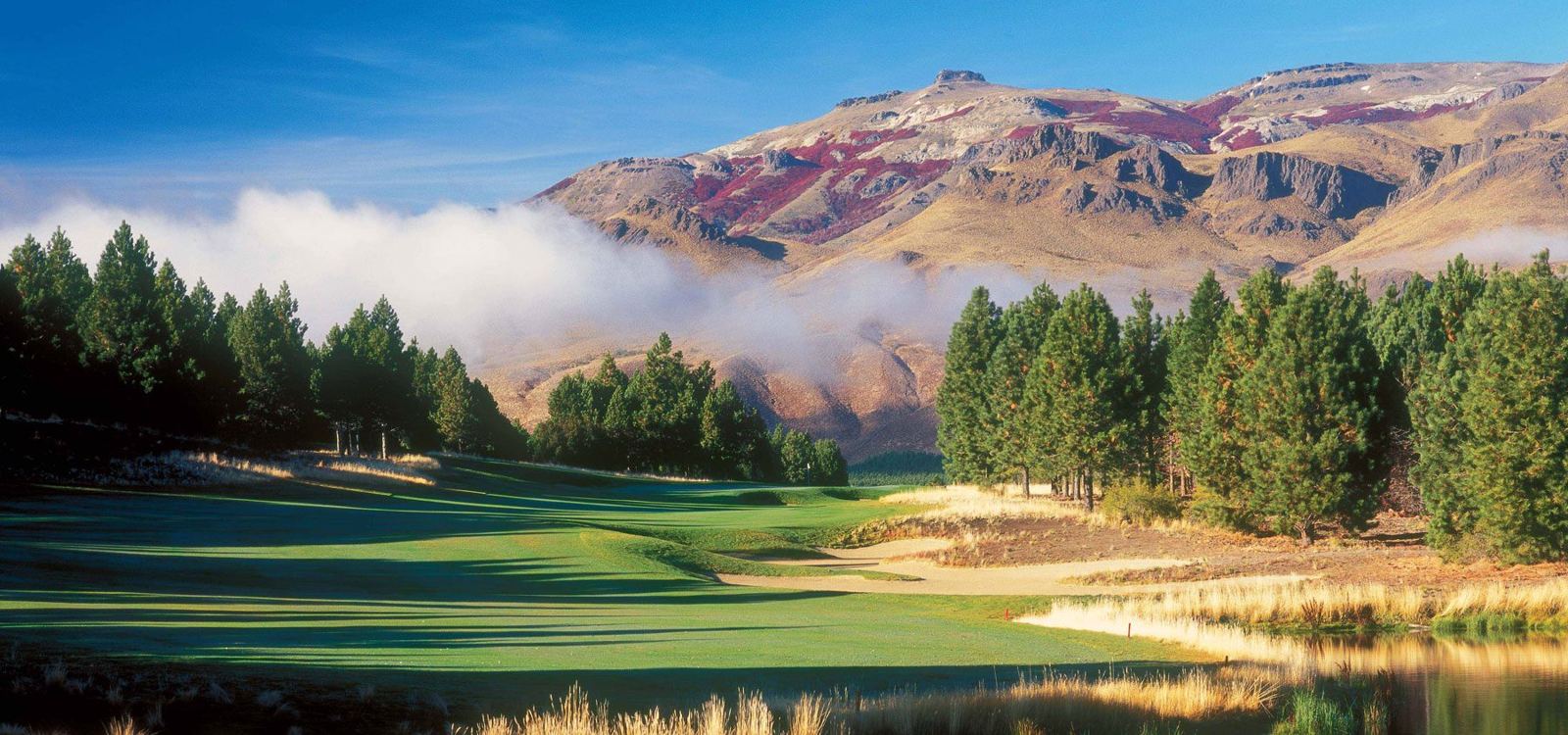
Private clubs in Buenos Aires, golf by the lakes in Patagonia, among the vines in Mendoza and on historic estancias.
Polo in Argentina
The home of the world’s best polo, and the Triple Crown from September to December.
Rugby in Argentina
Playing tours for universities, clubs and veterans, and Los Pumas at home in 2027.
More in Argentina
Run a marathon or a mountain race, fish for trout in Patagonia, taste Malbec under the Andes, or sail the fjords from Ushuaia to Punta Arenas.
What’s on
What’s on in Argentina
Buenos Aires Golf Tour
Five rounds at the great private clubs of Buenos Aires, with steak, tango and the city in between.
Argentina Golf and Wine
Buenos Aires, then golf among Mendoza's vineyards under the Andes, with Salta and Cafayate to add.
Buenos Aires and Patagonia Golf
The city clubs, then Bariloche and Llao Llao on the lake, with the Seven Lakes road to add.
The Grand Golf Tour of Argentina
Sixteen days: Buenos Aires, the Perito Moreno glacier, Patagonia and Iguazú Falls.
Golf at the Historic Estancias of Córdoba
Three to five days on grand old ranches in the heart of the country.
Argentina and Chile: Golf Across the Andes
Mendoza, then a flight over the Andes to Santiago, with golf and wine on both sides.
Argentina, Chile and Machu Picchu
Seventeen days and three countries, finishing at Machu Picchu.
The country
Where you’ll go
Argentina runs almost the length of South America, from subtropical forest and the Iguazú Falls in the north to glaciers and the Beagle Channel in the far south, with the Andes down its western edge. Buenos Aires, its capital, is a city of grand avenues, steakhouses and tango.
It is also one of the great sporting nations. Golf arrived from Scotland in the nineteenth century, and Buenos Aires now has some of the finest private clubs in South America. Polo here is played at the highest level in the world, and rugby clubs welcome touring sides like family.
The seasons are the reverse of ours: the best months for most of the country run from September to May, with Patagonia at its best from November to April.
On the map
8 places to know in Argentina
Hover over or tap a pin to explore.
Buenos Aires
The base for most tours: the country’s best private golf clubs, the great polo grounds, steak and tango.
A city of grand avenues, steakhouses and tango. The great private golf clubs are 30 to 50 minutes from the centre and closed to visitors on Mondays, and Palermo is the home of the Argentine Open, the last of polo’s Triple Crown, in November and December.
From London via Madrid or Brazil for now; non-stop flights from Heathrow (about 14 hours) are due back from 28 March 2027.
When to go
Argentina through the year
The guide
The Argentina guide
Travel notesGetting there, Entry requirements, Weather and seasons, Money, Plugs, Phones, Drinking water, Getting around, Tipping, Language and time, Emergencies, Other trips: Fishing permits, Language and time, Emergencies.+
Getting there+
Flights from the UK go via Madrid or via Brazil. British Airways' Heathrow service to Buenos Aires currently stops in Rio de Janeiro, with non-stop flights (about 14 hours) due to return from 28 March 2027.
Flying via Rio? It makes an easy stopover: add a few days in Rio de Janeiro before or after your trip.
International flights are not included: you book your own and we plan the trip around them. Flights within Argentina are arranged with your trip by our team on the ground.
Entry requirements+
What you need to enter Argentina, and Brazil if you add a Rio stopover or visit the Brazilian side of Iguazú.
- Argentina: no visa needed for tourism for up to 90 days. Your passport must be valid for the whole of your stay.
- Brazil (a Rio stopover, or the Brazilian side of Iguazú): no visa needed for up to 90 days. Your passport must be valid for at least 6 months from the day you arrive in Brazil.
- Travelling on another passport? Check your own government's advice.
Weather and seasons+
The seasons are the reverse of ours: summer from late December to March, winter from late June to September. The country runs about 3,800 km north to south, so the climate varies widely: subtropical and warm in the north, warm and humid on the Pampas around Buenos Aires, dry and sunny in Mendoza, and cold, humid and very windy in Patagonia. Buenos Aires is temperate and good all year, averaging about 18°C. For Patagonia's glaciers and trekking, November to March is best; for Salta and the north, spring and autumn.
Money+
The Argentine peso (ARS). Credit cards are accepted in most businesses and cash machines are easy to find in the cities; change money only at banks or authorised exchange offices. Carry small notes, and pay in pesos even where dollars are taken. Foreign tourists who pay for a hotel with a card issued abroad can have the 21% VAT on the room taken off the bill, showing their passport and entry receipt.
Plugs+
The official plug is Type I, with flat pins in a V and an earth pin, on 220 volts at 50 Hz: bring an adaptor. UK chargers are fine with just the adaptor.
Phones+
Three networks, Claro, Movistar and Personal, all 4G. A local SIM needs your passport. Buenos Aires has free public BA WiFi.
Drinking water+
Tap water in Buenos Aires is safe to drink.
Getting around+
Most long-haul flights land at Ezeiza (EZE), about 32 km from the centre of Buenos Aires. Domestic flights mostly leave from Aeroparque (AEP) in Palermo, inside the city, and every province has an airport. Long-distance coaches leave from Retiro, and ferries cross the River Plate to Montevideo and Colonia in Uruguay. In the cities, Uber, Cabify and DiDi work, and BA Taxi is the city's official taxi app.
Tipping+
About 10% in restaurants, bars and cafés is usual, though not required: in cash, added to a card payment where offered, or by bank transfer.
Language and time+
Spanish, in its River Plate form, with vos for you and its own slang, lunfardo; many drivers and ticket staff speak no English. Argentina is on UTC−3 all year, 3 hours behind the UK in winter and 4 in summer.
Emergencies+
911 works anywhere in Argentina. Police 101, fire 100, medical emergencies 107. In Buenos Aires the Tourist Police at Avenida Corrientes 436 help with thefts and lost property, with interpreters including English.
Other trips: Fishing permits+
Everyone fishing in Neuquén needs a provincial fishing permit, and some stretches, such as the mouth of the Chimehuín, need a special one. We confirm what you need with your quote.
Language and time+
Spanish (River Plate Spanish) Time: UTC−3 all year: 3 hours behind the UK in winter, 4 in summer.
Emergencies+
911 works anywhere in Argentina.
- Police: 911 or 101
- Ambulance: 107
- Fire: 100
- Embassy: +54 11 4808-2200
Destinations in ArgentinaBuenos Aires, Córdoba, El Calafate, Iguazú Falls, Mendoza, Salta, San Martín de los Andes, Ushuaia.+
Buenos Aires+
Argentina's capital, a city of very different neighbourhoods: cobbled, bohemian San Telmo, leafy Recoleta, and Palermo's parks and lakes. Tango was born here and in Montevideo, and has been on UNESCO's list of intangible heritage since 2009.
Getting there: From London via Madrid or Brazil for now; non-stop flights from Heathrow (about 14 hours) are due back from 28 March 2027.
Food and drink: The parrilla: bife de chorizo, ojo de bife, lomo, entraña and asado de tira, or a parrillada, the shared mixed grill. Steak comes seasoned with just salt and chimichurri on the side, and cooked more than UK diners expect: ask for jugoso if you like it pink. Empanadas, locro and the city's own pizza tradition too.
- San Telmo: the Sunday antiques fair around Plaza Dorrego, and tango bars and milongas.
- La Boca: the painted houses of Caminito and La Bombonera, the Boca Juniors stadium; the city advises against walking there at night.
- Recoleta: the cemetery and Eva Perón's tomb, the National Museum of Fine Arts and the weekend craft fair.
- Palermo: the Japanese Garden, the rose garden, the Botanical Gardens, MALBA and the bars of Palermo Soho.
- The centre: Plaza de Mayo, the Casa Rosada, a guided tour of Teatro Colón, and the Obelisco on Avenida Corrientes.
- Puerto Madero: the old docks, now restaurants and bars, and the Puente de la Mujer.
Córdoba+
Argentina's second city, near the middle of the country. Its Jesuit Block, a World Heritage Site since 2000 with five Jesuit estancias, records more than 150 years of the Jesuits' work in the 17th and 18th centuries. The hills around it, the Sierras, are one of Argentina's great holiday areas.
Getting there: About 1 hour 20 minutes by air from Buenos Aires.
Food and drink: Fernet and cola, a Córdoba institution; goat's cheese, kid and cured meats; craft beer and the Oktoberfest at Villa General Belgrano; and wine from Colonia Caroya.
- A guided tour of the Jesuit Block: the church of the Compañía de Jesús, the Colegio Nacional de Monserrat and the university museum, in English on weekdays.
- The Jesuit estancias: Alta Gracia, Jesús María, Santa Catalina, Caroya and La Candelaria.
- The Punilla valley: Villa Carlos Paz and the cable car, and Cosquín's festivals.
- The Calamuchita valley: Villa General Belgrano and the alpine village of La Cumbrecita.
- The Tren de las Sierras, through Punilla since 1889.
El Calafate+
The gateway to Los Glaciares National Park, on the shore of Lake Argentino. About half the park is covered by glaciers from the Southern Patagonian Ice Field. The Perito Moreno glacier, 80 km from town, has an ice face up to 60 m high and every few years dams an arm of the lake until the ice gives way.
Getting there: About 3 hours by air from Buenos Aires.
Food and drink: Patagonian lamb roasted on an iron cross over the fire; calafate berry jam and ice cream; artisan chocolate.
- The Perito Moreno walkways: several kilometres at different heights, some accessible to people with reduced mobility.
- Ice trekking on the glacier, or a boat to see the face from the water.
- A catamaran on Lake Argentino to the Upsala and Spegazzini glaciers.
- The Glaciarium ice museum, just outside town.
- An estancia visit, with lamb asado and horse riding.
- El Chaltén for trekking, 220 km on paved roads.
Iguazú Falls+
Iguazú National Park in Misiones, a World Heritage Site since 1984 and run alongside Brazil's park across the river. The falls are about 2.7 km wide and 80 m high, in subtropical forest with jaguars, tapirs, howler monkeys and around 400 bird species.
Getting there: About 2 hours by air from Buenos Aires.
- The Devil's Throat (Garganta del Diablo): a 2.2 km walkway to the balcony above the falls, fully wheelchair accessible. Check it is open: it closes when the river runs high.
- The Upper and Lower circuits, and the Macuco trail.
- The jungle train linking the circuits.
- Full-moon walks to the falls.
- From Puerto Iguazú: the Triple Frontier with Brazil and Paraguay, birdwatching and boat trips.
Mendoza+
Argentina's wine capital at the foot of the Andes, with more than 300 wineries open to visitors. Aconcagua, at 6,962 m the highest mountain in the Americas, is about 185 km from the city.
Getting there: About 2 hours by air from Buenos Aires.
Food and drink: Malbec above all, with Mendoza-style empanadas and asado, and Michelin-starred restaurants at the wineries and in the city.
- The wine regions: Luján de Cuyo for Malbec, the Valle de Uco for mountain views and boutique wineries, and Maipú close to the city.
- Aconcagua Provincial Park; the climbing season is November to March.
- Rafting on the Mendoza River and cycling between vineyards.
- The Cacheuta hot springs.
- Parque General San Martín and the Cerro de la Gloria in the city.
- The Vendimia grape-harvest festival in February and March.
Salta+
A colonial city in the north-west and the base for the coloured gorges of the Andes, the high plateau and the high-altitude vineyards of Cafayate.
Getting there: About 2 hours by air from Buenos Aires to Salta; Cafayate is 3 to 4 hours by road from there.
Food and drink: Empanadas salteñas from the clay oven, humita, tamales and locro, with Torrontés, the aromatic white grown at about 1,750 m and higher in Cafayate.
- The colonial centre around Plaza 9 de Julio: the cathedral, the Cabildo and the MAAM museum with its Inca mummies from Llullaillaco.
- The cable car up Cerro San Bernardo, and folk music at a peña.
- The Train to the Clouds, climbing to 4,220 m at the La Polvorilla viaduct, April to November.
- Route 68 through the Quebrada de las Conchas to the Cafayate wineries.
- A day trip to the Quebrada de Humahuaca in Jujuy, a World Heritage valley used as a trade route for 10,000 years.
San Martín de los Andes+
A Patagonian lake town on Lake Lácar, inside Lanín National Park, named after the 3,776 m Lanín volcano, and one end of the Seven Lakes Route.
Getting there: About 2 hours by air from Buenos Aires, to Bariloche or to Chapelco for San Martín.
Food and drink: Patagonian lamb, home-made pasta, artisan chocolate and local craft beer.
- The Seven Lakes Route, just over 110 km of lakes and forest towards Villa La Angostura.
- A boat to Quila Quina for kayaking, about 30 minutes from the town pier.
- The Bandurrias viewpoint walk.
- Cerro Chapelco: skiing in winter, hiking and zip lines the rest of the year.
- Fly fishing in Lanín National Park, November to April, with a permit.
Ushuaia+
The capital of Tierra del Fuego on the Beagle Channel, about 3,100 km from Buenos Aires, founded in 1884 on land the Yámana people had lived on for more than 10,000 years. Best visited from September to March.
Getting there: About 3 hours 30 minutes by air from Buenos Aires.
Food and drink: Centolla, the Beagle Channel king crab; Patagonian toothfish; and Fuegian lamb raised on the salt pastures.
- A boat on the Beagle Channel: sea lions, penguins and the Les Eclaireurs lighthouse.
- Tierra del Fuego National Park, 12 km from the city.
- The End of the World Train, on the last stretch of the old prison railway.
- The old prison and the Maritime Museum, and Estancia Harberton.
- Cerro Castor ski resort, June to September.
Booked with confidence
Follow On Tours is the tour operator for your trip. You book with us and pay us: one contract, one point of contact from your first question to your flight home.
We are a member of ABTOT, number 5718. If we were to become insolvent, ABTOT cover provides a refund if you have not yet travelled. This covers non-flight packages.
Depending on your arrangements, our trusted local team is there to deliver your trip and help with anything you need while you're away.
Questions
Ask anything about Argentina
How do I book an Argentina tour?
Tell us the sport, your dates and who is travelling. We put the trip together with our team on the ground and send you a quote. Nothing is booked until you say yes.
When is the best time to go?
It depends on what you come for. Golf: September to May in Buenos Aires and Mendoza, November to April in Patagonia. Polo: the Triple Crown runs from September to December. Rugby: Los Pumas play at home in July and August 2027. Fly fishing: 1 November to 1 May. The Iguazú Falls are open all year.
Are flights included?
Flights are not included, international or within Argentina, at the moment. We tell you the best routes and build your days around them.
Do I need a visa?
British passport holders don't need a visa to visit Argentina for tourism for up to 90 days, and your passport must be valid for the whole of your stay. Checked against GOV.UK travel advice on 5 October 2026. Rules can change: always check before you travel.
What currency do they use?
The Argentine peso. Cards are accepted in most businesses; change money only at banks or authorised exchange offices, and carry small notes.
Do I need a plug adaptor?
Yes. Argentina uses Type I plugs (flat pins in a V) at 220 volts. UK chargers work with just the adaptor.
How far behind the UK is Argentina?
Three hours behind in the UK winter, four in the UK summer. Argentina stays on UTC−3 all year.
Should I tip?
About 10% in restaurants, bars and cafés is usual, though not required.
Can family and friends come along?
Yes, whatever the sport. If someone in your group isn't playing golf, watching the polo or on the rugby tour, we plan their days too: city tours, wineries, estancias, the falls and the glaciers.
Tap a question for our answer, or type your own.
Argentina with Follow On Tours
Join the Family
New Argentina trips, dates and offers, straight to your inbox.
Join the FamilyYour financial protection
Follow On Tours Limited is a member of the Association of Bonded Travel Organisers Trust (ABTOT), membership number 5718, and holds bonds A60089 and A60090.

The Association of Bonded Travel Organisers Trust Limited (ABTOT) provides financial protection under The Package Travel and Linked Travel Arrangements Regulations 2018 for Follow On Tours Limited, membership number 5718, and in the event of their insolvency, protection is provided for:
Non-flight packages
ABTOT cover provides for a refund in the event you have not yet travelled or repatriation if transportation was included in your package. Please note that bookings made outside the UK are only protected by ABTOT when purchased directly with Follow On Tours Limited.
In the unlikely event that you require assistance whilst abroad due to our financial failure, please call our 24/7 helpline on 01702 811397 and advise you are a customer of an ABTOT protected travel company.
You can access The Package Travel and Linked Travel Arrangements Regulations 2018 here: https://www.legislation.gov.uk/uksi/2018/634/contents/made
You can find out more about ABTOT here: https://www.abtot.com/