Let me take you back to Sydney, Australia, January 1999.
I'm eighteen. I've flown out on my own on a Malaysian Airlines ticket I paid for with wages from a job at Heathrow, and there I am on Yabba's Hill at the SCG with a schooner in my hand by eleven in the morning. Thirty degrees. The Barmy Army in full song. And I'm thinking: this is it. This is what I want to do with my life.
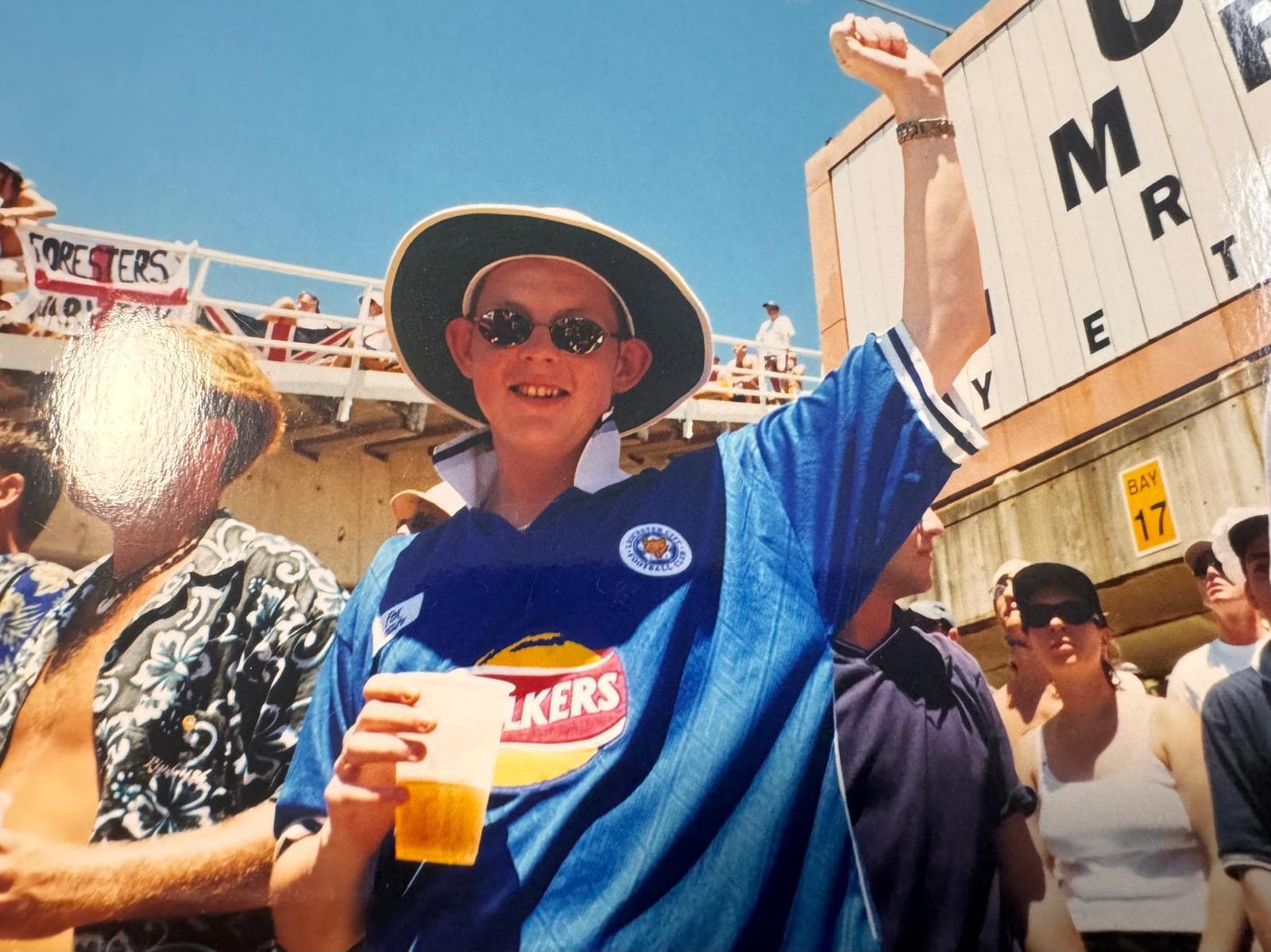
Then Darren Gough gets a hat-trick, and the whole hill goes up. Twenty-seven years later I still count that morning as the moment the course of my life quietly got set.
I'd been cricket mad for as long as I can remember. Football first — Leicester City through and through, Dad was a qualified refereeing instructor and had his coaching badges, one Grandad even played a few games up at Aberdeen — but it was my other Grandad taking me down to Grace Road that really did it. I'd stay up all night for the Ashes, Sky box wired up from downstairs to my bedroom through the loft. Going to Australia to watch England was honestly my only ambition as a child, and there I was, doing it. But it wasn't just the cricket that got me. It was the whole thing — the banter, the lads on the hill, the sun, the atmosphere. It was everything I'd ever wanted and a whole lot more.
I just had no idea how to make a living out of it yet.
The trip that started a company
It was 2004. England were off to South Africa and I did what you did back then — sent off for all the glossy brochures from the tour operators.
Four, five grand. I couldn't believe it. So my school friend Rob and I used the early internet, did the research, found the tickets and booked the whole thing ourselves. We flew out on Christmas Day — that was the night the tsunami hit; we landed in Johannesburg with it all over the television — did five nights camping wild in the Kruger, drove down through Blyde River Canyon, then flew into Cape Town for New Year's Eve and ended up at the Waterfront. We even stayed up to watch the sun come up.
The whole lot cost us about a grand, and we had the absolute time of our lives.
And I couldn't stop thinking: the operators wanted four or five for this? Maybe they just weren't using the internet properly.
On the last day I turned to Rob and said — I'm going to start a tour company, internet first, and it's going to be huge.
That's the bit I'd ask you to hold on to. Everything I've built since started with a traveller being quoted a silly price for something I knew could be done cheaper.
Seventeen years
Got home still sunburnt, reserved the company name, bought the domain, and Googled how to start a travel company. Zero experience, completely locked in, every spare hour on the web doing research.
Our first tour was the Ashes, 2006/07. Fewer than twenty people. I still have that signed cheque from our first customer on my office wall. We took a suitcase full of free T-shirts out with us and people actually wore them. We were off.
As a believer in the law of attraction — the business was all I thought about — the universe then did its thing. I'm flyering outside Trent Bridge that summer and I get chatting to a fella called Mike Edwards, who says, almost in passing, “I used to run cricket tours.” I got his number, asked him to mentor me, and his little black book became the blueprint for the whole thing.
Sri Lanka 2007. The million-dollar Stanford game in Antigua, which everyone else overlooked and we didn't. West Indies 2009 — and weirdly the financial crash actually helped us, because we were lean, web-first and cheaper than anyone.
It wasn't all smooth. After the 2010/11 Ashes the Aussie dollar went against us, and a year that should have been brilliant put us right back to square one. Steve and I took full ownership of the company, believed in the vision, and sharpened our pencils.
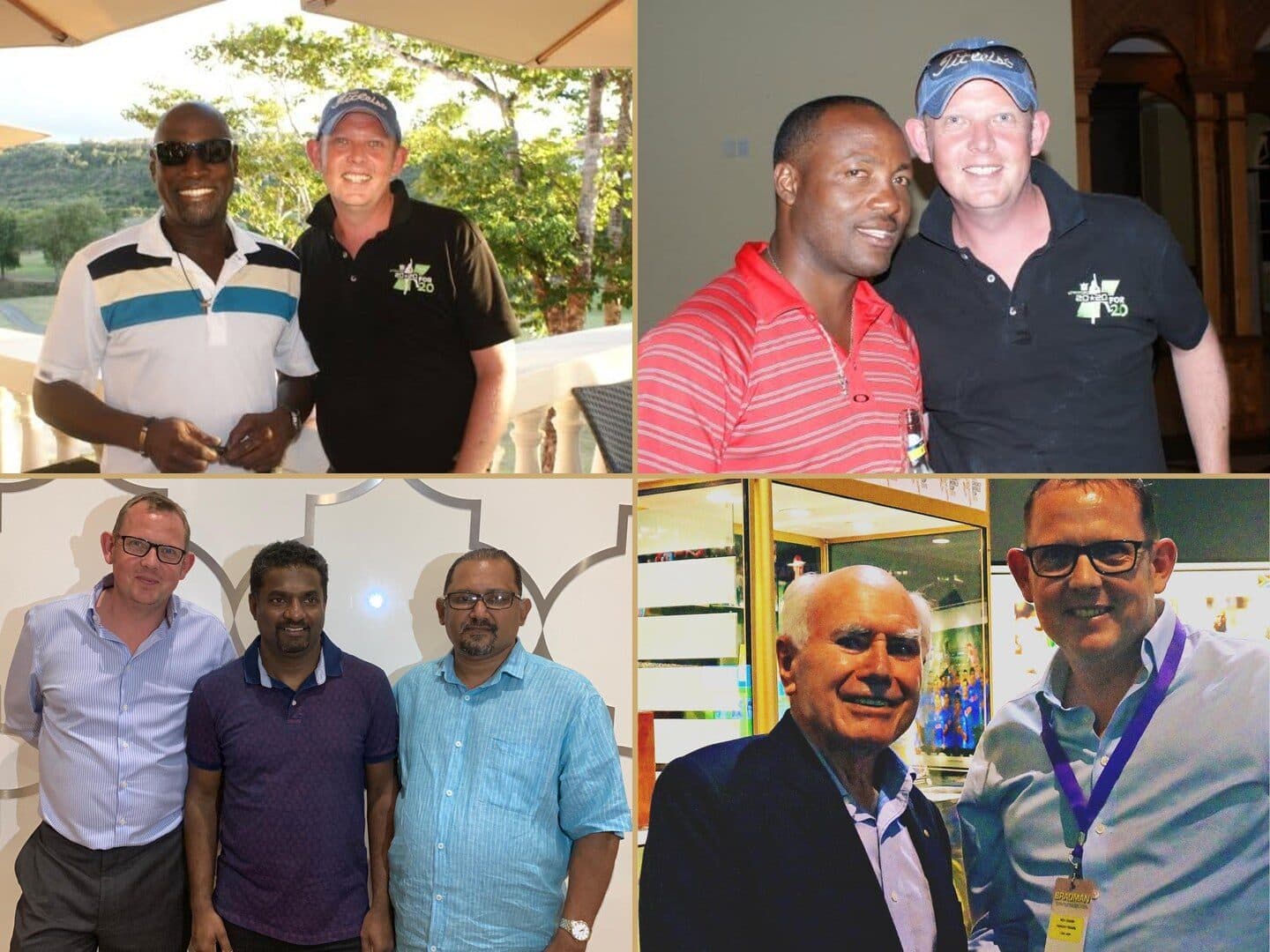
By the middle of the decade we had around 40% of the UK market and were the biggest specialist cricket travel company in the world. We even celebrated with hundreds of our best customers in our home town of Melton Mowbray — Geoffrey Boycott as the guest speaker, half a dozen ex-England cricketers in the room, alongside our favourite people.
We were absolutely flying. The Test Match Special team travelled with us. The press pack travelled with us. Official travel partnerships with the MCC, talkSPORT on board, and we were bringing out the biggest names in the game for events — Murali, McGrath, Steyn, Sobers, Athers, Richards, Gower, all of them. We even raised well over a hundred thousand for local charities along the way.
And when our spreadsheets finally couldn't cope, we spent two and a half years and a quarter of a million pounds building our own bespoke software. First time I'd ever gone near a line of code in my life.
Hang on to that one too.
Then 2020
South Africa that winter was the biggest tour we'd ever done — sixteen hundred people, nine hundred in Cape Town alone. I came home shattered after three weeks of burning the candle at both ends, and went straight back into the office to deliver the forthcoming Sri Lanka tour.
However, the pandemic noise was getting louder by the day. Boris went on the television that Sunday morning and said British nationals should get home now, or they might not get home at all. Steve and I went straight to the office. Sri Lankan Airlines had pulled all their flights off the GDS system. We grabbed the only option going on that out-of-hours Sunday and put everyone we had on the ground in Sri Lanka onto the first available Emirates flight home — hundreds of thousands of pounds, and we didn't think twice, because their safety was the only thing that mattered.
Then the money side hit. Monday morning, nine o'clock, and the phones were alive. The insurance companies deflected the liability to the operators, our terms were overridden by the European Package Travel Directive, and we were liable for full refunds within fourteen days.
But our money was stuck in Sri Lanka — a country sliding into economic collapse.
Seventeen years of blood, sweat and tears, gone. Not because we'd done anything wrong.
Just bad luck — a once-in-a-lifetime, black swan event we had zero control over. When it was clear limited company directors weren't getting a penny of government support, Steve and I let the staff and the offices go — properly, payouts and all — and watched seventeen years of net current assets disappear.
I thought I was bulletproof mentally. I wasn't. I would cry daily. I broke down. It was the lowest I've ever been. Everything we had built — gone.
What pulled me out, of all things, was a photo. My mum sent me a picture of a narrowboat for sale near home — something I'd always fancied for retirement. And being the free-spirited soul that I am, I thought: well, if I've got to stay at home, I'll live in a home that moves. So I rented the house out and went into low-cost living on the water. I did a lot of fishing and plenty of home schooling.
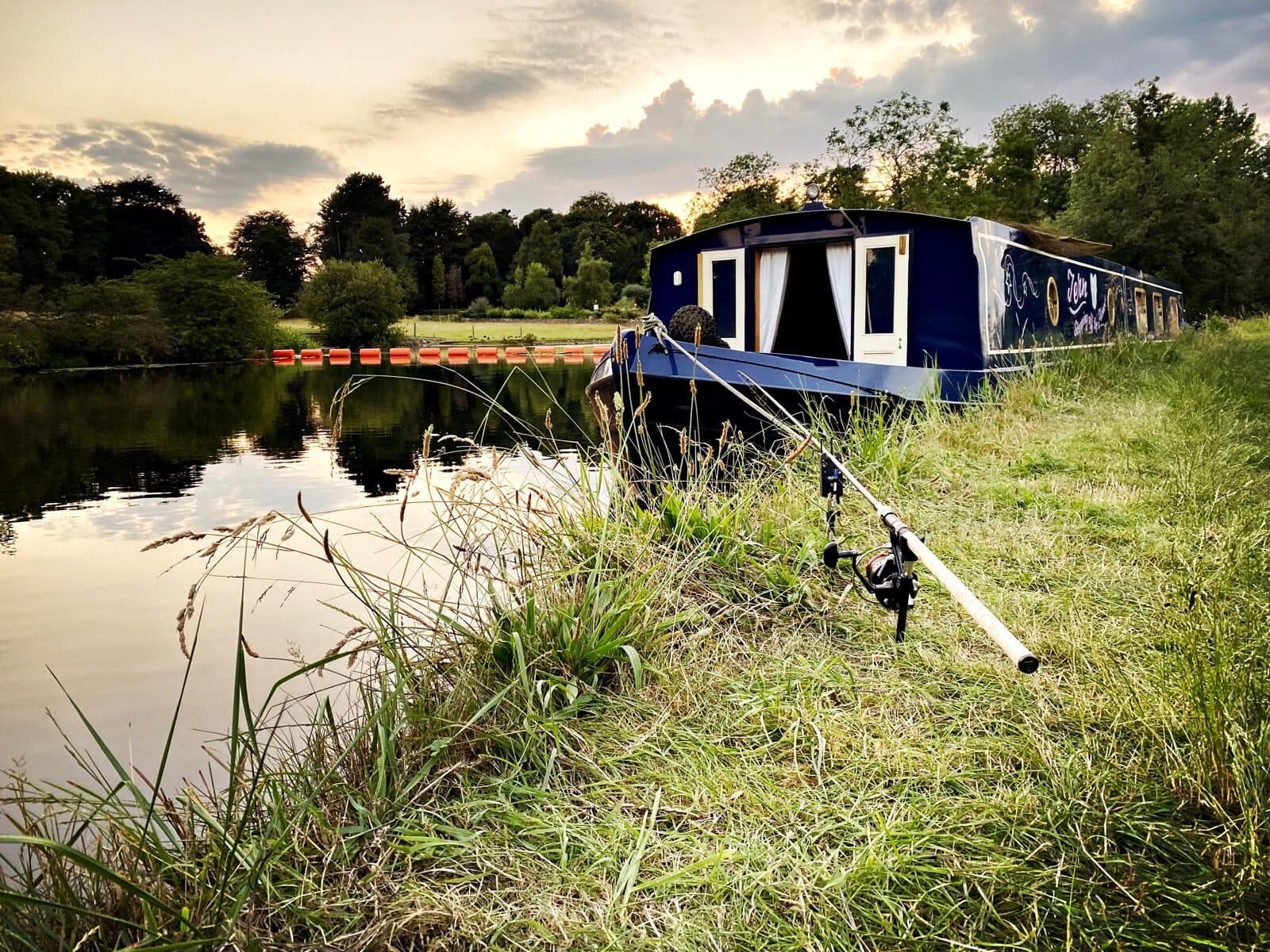
Honestly, I switched off. I started sleeping again. It felt like a weight had been lifted.
The business ticked over in low power mode until Gullivers, part of Travelopia, came in with an offer. It was nowhere near the valuations of the heyday, but with uncertainty still ahead we let it go and sold the business. I signed a four-year non-compete and, for the first time since I was twenty, I stopped.
Four years watching the world change
Thing is, I'm rubbish at stopping.
I got properly fit — lost about a quarter of my body weight and picked up a dumbbell for the first time in my life. I chased a mad idea in web3 that got loads of traction, until the market crashed in 2022 and took it down overnight.
You learn when you're losing, not when you're winning.
But it wasn't wasted time. I came out of it able to code, and with a proper understanding of what's coming. All this new technology is landing at once, and it's going to change how things work. I cannot get enough of it. Conferences, reading, networking, building.
So here I am, pointing all that new knowledge at the one thing I know better than anything — cricket travel, but bigger. Let's start with sports travel.
Last October a mate asked if I fancied the cricket again. My non-compete was up in February. The day it ended, I registered Follow On Tours.
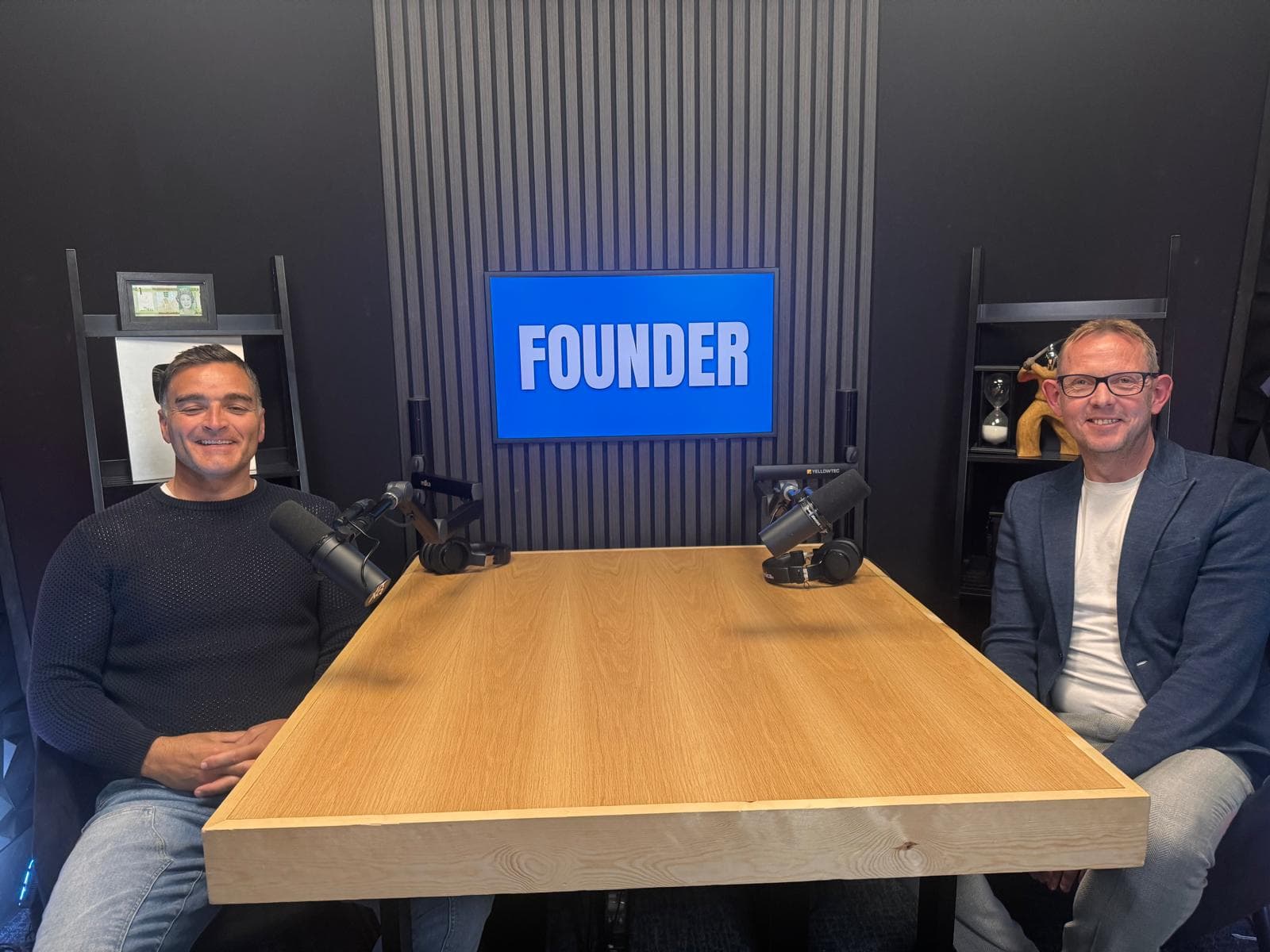
It started with me, a Mac mini and an AI assistant, talking it all out — what I knew, what used to drive me mad, the frustrations of the industry, and where the opportunity now was. None of what I've built was possible even eight months ago. So since February I've been one hundred per cent locked in again: building, rekindling relationships, and loading in seventeen years of destination knowledge, fixtures, suppliers and itineraries.
If you like doing things online, you can ask the Follow On Tours assistant anything you like, plan your trip around held stock at the sharpest price we can get you, add whatever else takes your fancy, and tell us anything more you'd like to do. It goes straight to the right people in the right country, comes back as a proper branded quote, and you can book it there and then. And when you travel, we hand you a Travel Companion App for the trip itself.
And if you'd rather just pick up the phone and talk it through with someone who knows the ground, the hotel and the fixture? That's still very much how we work. Ring me. Nothing about that has changed, and it never will.
This new technology means I can automate the donkey work and do a week's work in a day — and what that means for you is a keener price than ever before.
So here I am, back to do it all again
This is my legacy. Follow On Tours.
And here's the promise — the same one I made to myself back in Cape Town in 2004.
You get exactly the trip you want — the tickets and the core hotels, quoted honestly, at the sharpest rate I can get you. Seventeen years of knowledge, in your pocket, on your phone: the grounds, the hotels, the cities, what to do between games, what's worth your money and what isn't.
You get the best people on the ground in every country I send you to — the ones I've spent seventeen years finding and testing.
And if you want more than the core, we cater for that too — transfers, extensions, a safari, a private box, something nobody's thought of yet. We'll build it around you. That's the whole point.
Your money is financially protected: Follow On Tours is bonded with ABTOT.
This is bigger and more ambitious, we previously followed England overseas. Now we cater for far more than that — cricket and golf first, with plenty more to come.
In January I'll be back in Cape Town, where there are three thousand old friends I'm looking forward to saying hello to again. Four years out — watching the game change, watching the world change, getting myself fit and hungry again — maybe, in hindsight, the pandemic turned out to be the best thing that could have happened to me.
One last thing, on the technology
It's used behind the scenes. It does the fetching and carrying — the paperwork, the chasing, the checking of fixtures and flight times, the jobs that used to keep me at a desk until midnight. What it doesn't do is replace the person at the end of the phone. It just means when you call, I've already got the answer in front of me, and I've got the time to talk properly.
Personal relationships matter most of all. What's changed is that I've finally got the tools to deliver it properly.
One more thing
I started this by telling you about a morning on Yabba's Hill in January 1999. Eighteen years old, schooner in hand by eleven, watching Darren Gough take a hat-trick and thinking: this is what I want to do with my life.
Twenty-seven years later, Darren has joined Follow On Tours as an ambassador & shareholder.
I'm not sure the eighteen-year-old on that hill would have believed it. I'm not entirely sure I do.
Welcome to the future of travel.
Welcome to the Follow On.
Ian Kerr — Founder, Follow On Tours
