24 June 2026 · Ian Kerr
Fourteen Days That Show You Sri Lanka Properly
Sri Lanka is my favourite country in the world. Over the last seventeen years I've been back more times than I can sensibly count, and every single visit reveals something new.
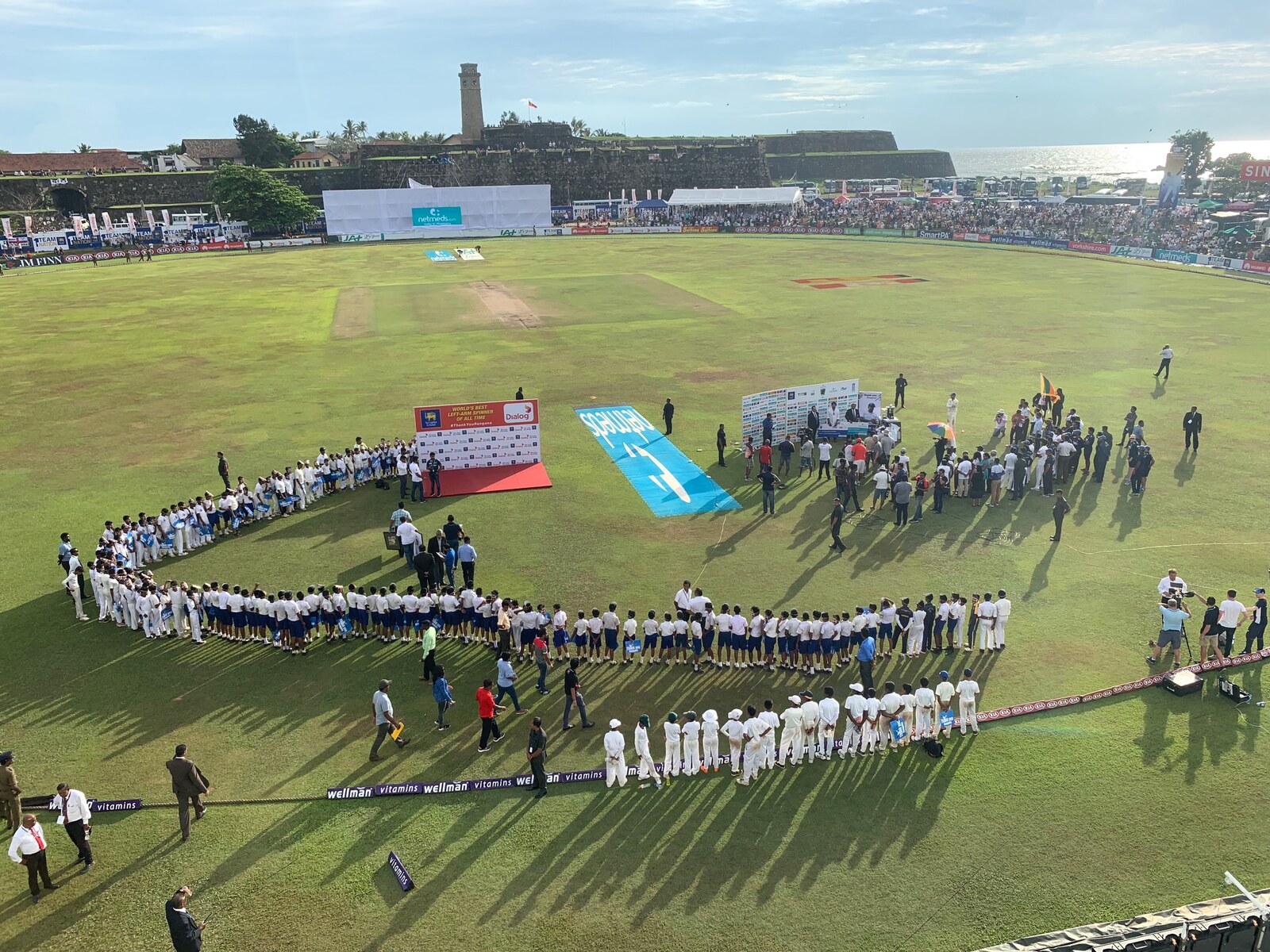
For cricket lovers, it offers something no other destination can match: a year-round cricket calendar layered onto a travel experience that ranks among the best on the planet. Galle's Test ground sits inside the walls of a seventeenth-century Dutch fort with the Indian Ocean breaking behind the bowler's arm. Pallekele plays its cricket at altitude with mountain views. Colombo delivers the intensity of a capital city on a match day. And between the cricket, the country opens up like few do — ancient temples, leopard-rich national parks, tea hills that carpet the highlands, and a coastline that stretches from surf beaches to calm lagoons.
What follows is the result of those seventeen years. Fourteen days built around the cricket, designed to show you the country properly between sessions.
Test cricket gets you on the plane. Sri Lanka does the rest.
1. Negombo — the soft landing
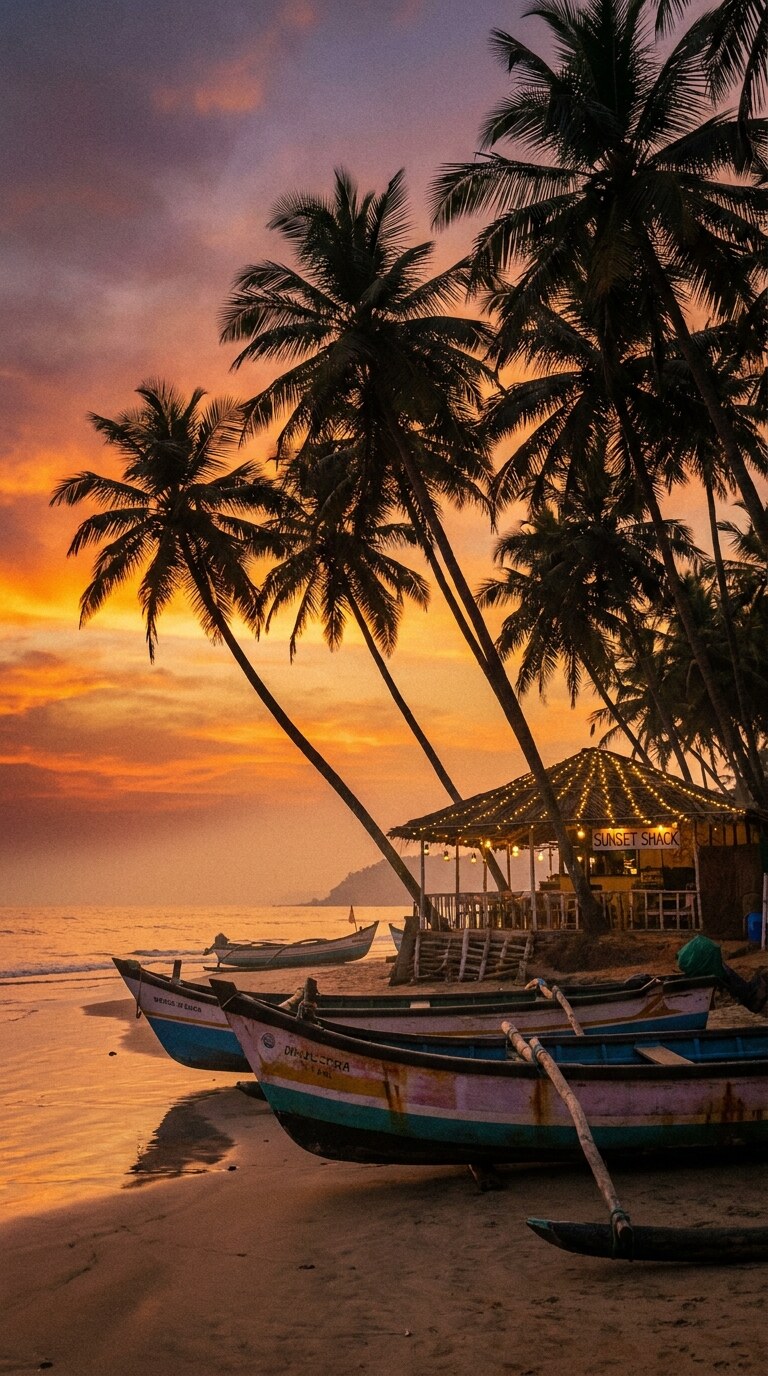
Start here. Negombo sits twelve kilometres from Bandaranaike International Airport — a twenty-minute drive — and that proximity is doing real work. After a long flight from London, the last thing you want is three more hours in a car. You want a beach, a fan, and a swimming pool, in that order.
The town has the old spice-port bones of seventeen hundred and something — Portuguese churches, Dutch fort fragments, a fishing harbour that comes alive at first light when the Karava fishermen bring in the morning catch. By breakfast you've gone from your front door in England to a seafront in the tropics in less than twenty-four hours, and the rhythm of the island has started.
Treat Negombo as the arrival night. The proximity to the airport is the whole point. A soft landing on the way in.
2. Colombo — Test cricket at SSC and white-ball at the R. Premadasa
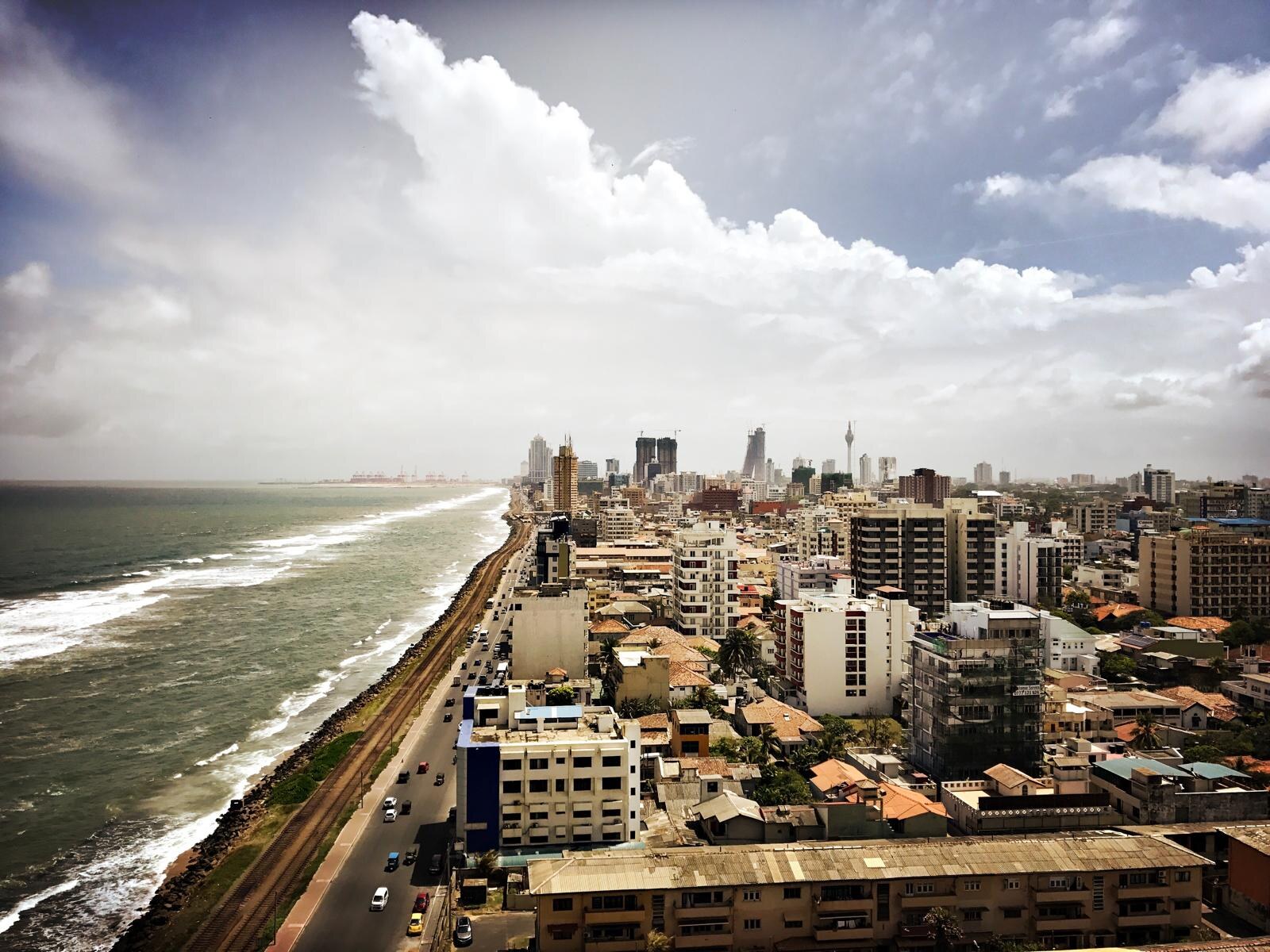
Colombo holds two principal cricket grounds — one for the red ball, one for the white. For most of our clients, the red-ball ground is the reason the city earns a stop.
The Sinhalese Sports Club Ground — the SSC — is the spiritual home of Test cricket in Colombo. Hosting Tests since the early 1980s, set in the leafy Cinnamon Gardens suburb, it carries the kind of clubhouse heritage you only find at grounds with genuine history. A Test at SSC is unmistakably Sri Lankan and unmistakably classical — small, intimate, with a crowd that knows the game inside out. For the vast majority of touring cricket fans, SSC is one of the central reasons you make the stop in the city.
The R. Premadasa Stadium is Sri Lanka's primary ODI and T20I venue. Completely rebuilt for the 2011 World Cup, capacity around thirty-five thousand, modern sightlines, and a real noise to it when the local side is going well. Quarter 17, north of the central business district, surrounded by the city — properly urban cricket in a way Galle and Pallekele aren't.
Beyond cricket, the city itself has transformed in the last decade. Contemporary restaurants and rooftop bars have layered onto the colonial bones. Galle Face Green — the seafront promenade, the original British horse-racing strip — is where the city gathers at sundown, kites in the air, kottu roti pans clattering from the food carts.
For accommodation, options range from Cinnamon Grand for central five-star, Shangri-La for waterfront luxury, or Mount Lavinia Hotel — the original British Governor's residence, now a heritage hotel with a private beach. We'll match the property to your tour, the timing, and the budget.
3. Pinnawala — the elephant moment on the way inland
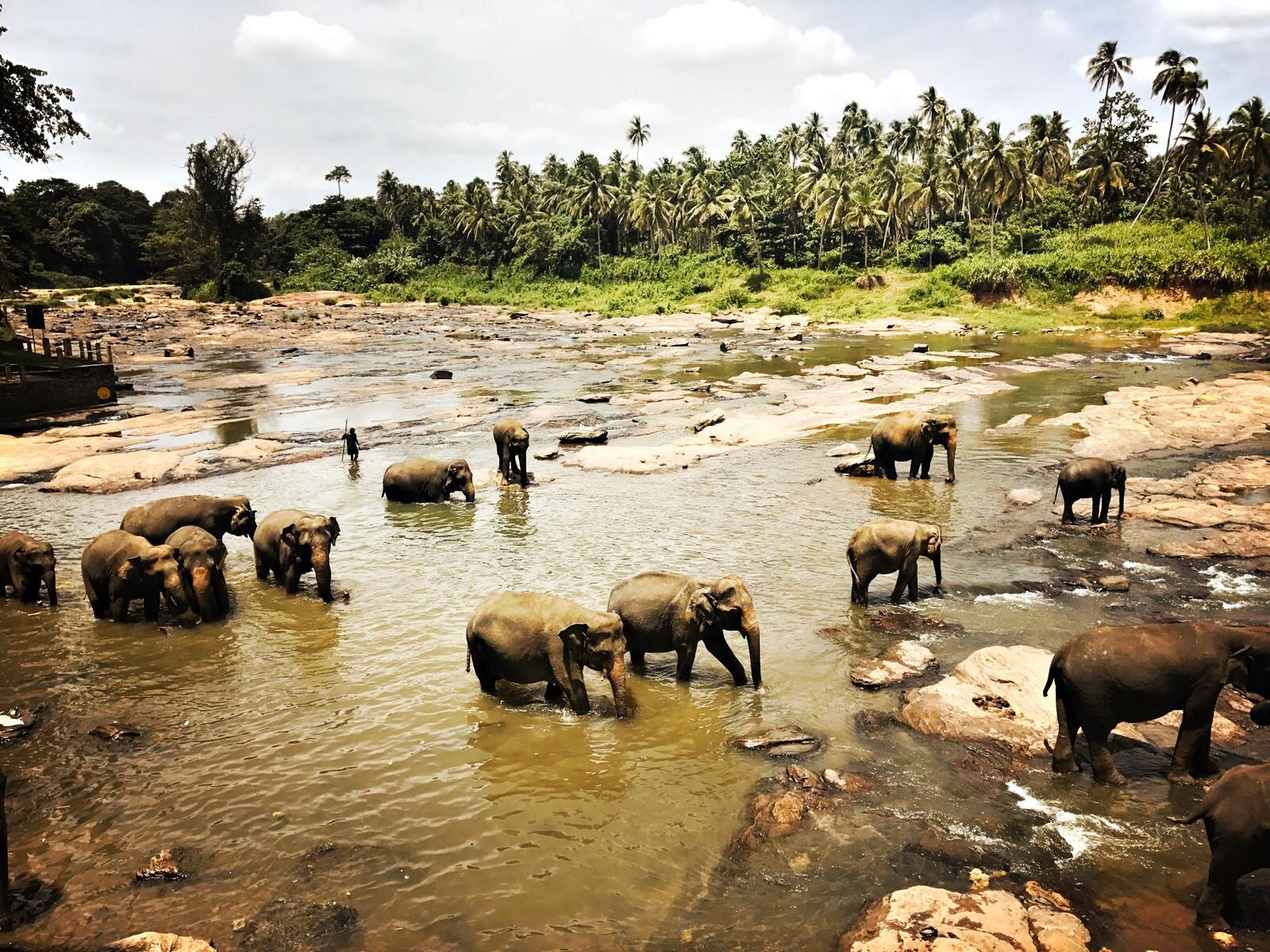
On the drive north from Colombo to the Cultural Triangle, you stop at Pinnawala. The elephant orphanage holds around ninety elephants — orphans, displaced animals, wounded animals — cared for by wildlife authorities, and twice a day the entire herd walks through the village to bathe in the river.
You watch this from the bank, four or five metres from the water, sometimes closer. Adult elephants playing with calves, calves spraying water at each other, the herd matriarch keeping order. There are wildlife experiences that earn the term "unforgettable" through overuse. This is one that still deserves the word.
It's a one-hour stop on the way inland. Time it for the bathing slot and you're back in the car for Sigiriya by lunchtime.
4. The Cultural Triangle — the wonder days
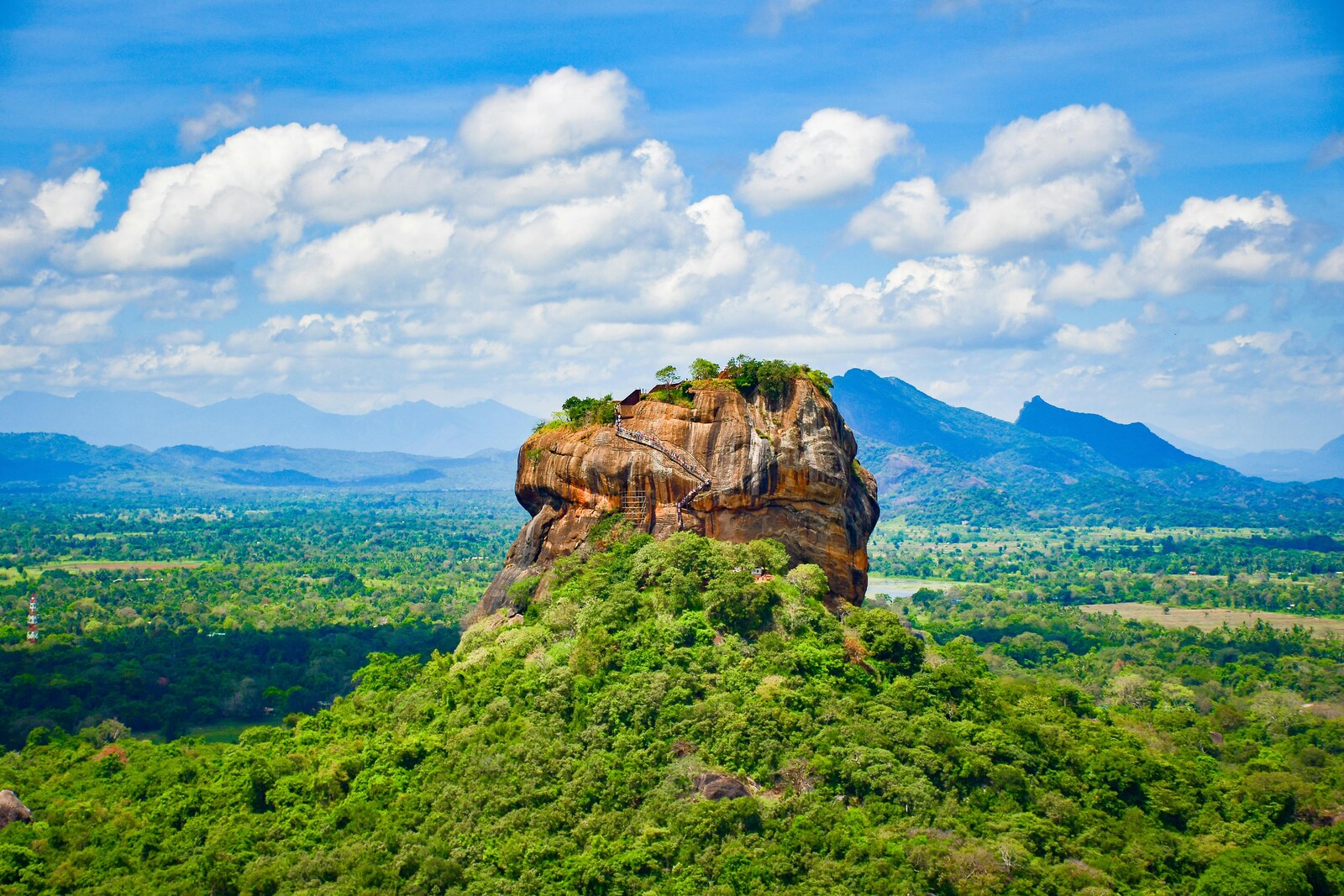
Continuing inland from Pinnawala, the country opens into the Cultural Triangle — the central plain that holds the ancient capitals, the rock fortresses, and the cave temples. Eight UNESCO World Heritage Sites in one region. This is the part of the trip your partner will photograph the most, and rightly so.
Sigiriya is the centrepiece — a fifth-century rock fortress rising two hundred metres from the jungle floor, built by a king who had murdered his father and was waiting for retribution. The frescoes inside the sheltered rock face, the mirror wall, the water gardens at the base, the climb up the lion stairway. Set off at dawn, you're at the summit for sunrise and back at the hotel for breakfast.
Dambulla's cave temples sit twenty minutes away — five caves containing over a hundred and fifty Buddha statues and murals dating back to the first century BC. Polonnaruwa's medieval ruins and the ancient city of Anuradhapura are the deeper-history days for clients who want them.
Our preferred Cultural Triangle base is Heritance Kandalama — designed by Geoffrey Bawa, built into the rockface above a lake, surrounded by jungle, three pools including an infinity pool that has been quietly winning architecture awards since the nineties. Subject to availability, but there are literally dozens of first class properties in the local area.
5. Kandy — Test cricket at altitude
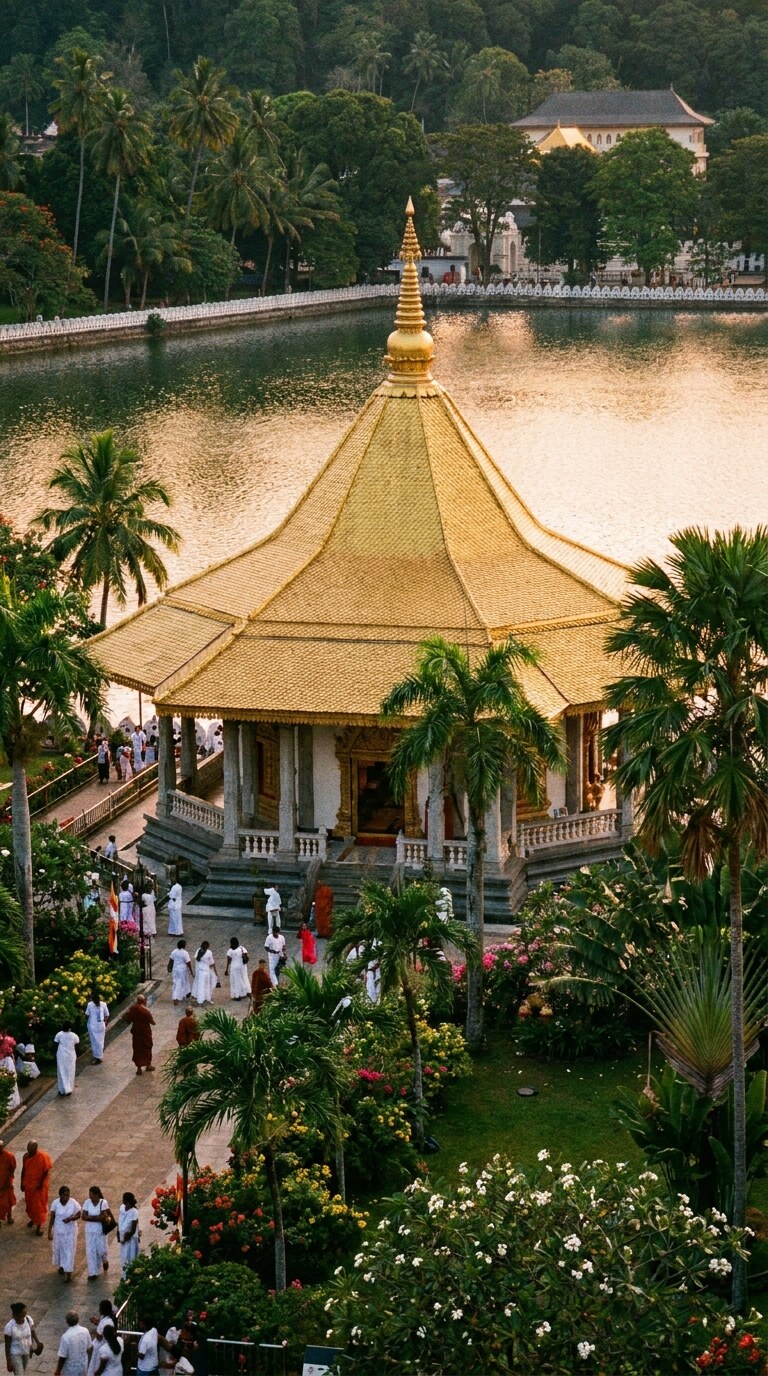
Kandy is the cultural heart of Sri Lanka and the gateway to the hill country. The city sits in a bowl of green hills with a lake at its centre and the Temple of the Sacred Tooth Relic on its eastern shore — one of the most sacred sites in the Buddhist world. The setting alone justifies two nights.
The cricket is at Pallekele International Cricket Stadium — also known as the Muttiah Muralitharan Stadium — on the outskirts of town. Opened in 2009, capacity around thirty-five thousand, set in mountains and dramatically different in tempo from the coastal grounds. Cooler temperatures, longer shadows in the afternoon session, grass banks to the north and south for clients who prefer to take their cricket lying down on a hillside rather than seated in a stand.
Pallekele's Test days have a different feel to Galle's. Where Galle is the postcard ground, Pallekele is the working ground — quieter crowd, denser cricket, a viewing experience that rewards focus.
For accommodation we'd look at Cinnamon Citadel for the riverside five-star option, or the Tourmaline for a smaller four-star with hillside views and the intimate group atmosphere that makes a tour feel like a tour rather than a holiday. The right property depends on the size of your party and the level you're travelling at.
6. Nuwara Eliya — the tea country
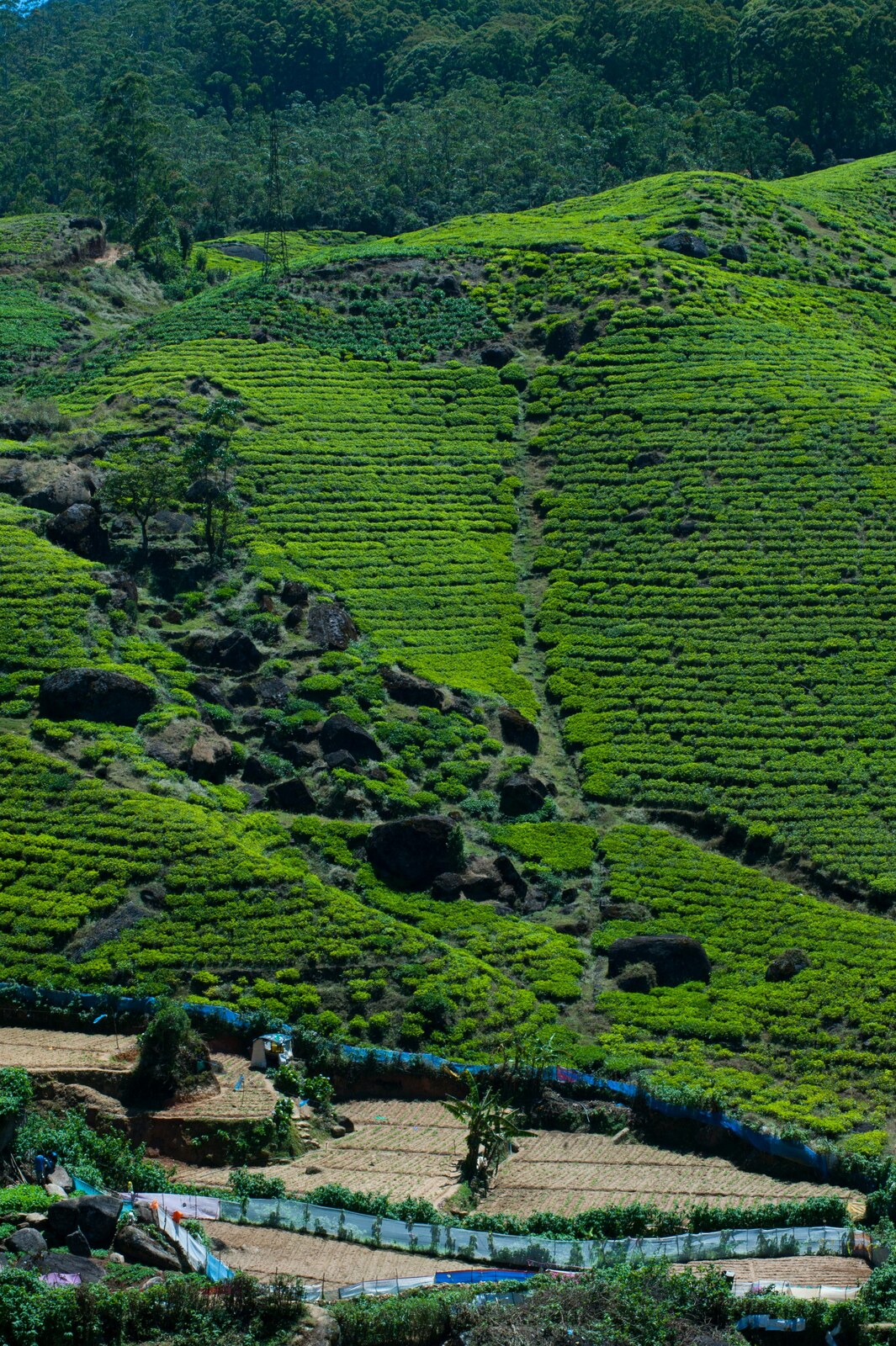
There's no international cricket in the hill country, but a Sri Lanka tour that skips Nuwara Eliya is missing one of the trip's quiet highlights. Two-and-a-half hours uphill from Kandy through tea plantations and switchback mountain roads, you arrive in what the British called Little England — Georgian and Queen Anne buildings, a 125-year-old golf club, and a climate that drops to sixteen degrees centigrade and asks you to put on a jumper.
The tea plantation tour is the day. Visit a working factory, walk the fields, watch the production process from picking to sorting to packing, and finish with a cup of pure Ceylon tea brewed from leaves picked that morning. There's a clear quality difference from anything you've drunk before.
The Grand Hotel is exactly as the name suggests — Grand. Built in 1819, later the residence of one of Wellington's adjutants at Waterloo, fifteen acres of prize-winning gardens. The original snooker room contains a snooker table that has been in continuous use for one hundred and seventy-six years, complete with the original scoreboard and fireplace. High tea every afternoon. A genuinely living piece of heritage — the kind of hotel where the building is half the reason you came.
A morning hike out to Horton Plains and World's End — a sheer thousand-metre drop at the edge of a high plateau — is the active option for clients who want one. Five hours total, dramatic, occasionally compared to the Scottish Highlands.
7. Yala — the leopards before you turn west
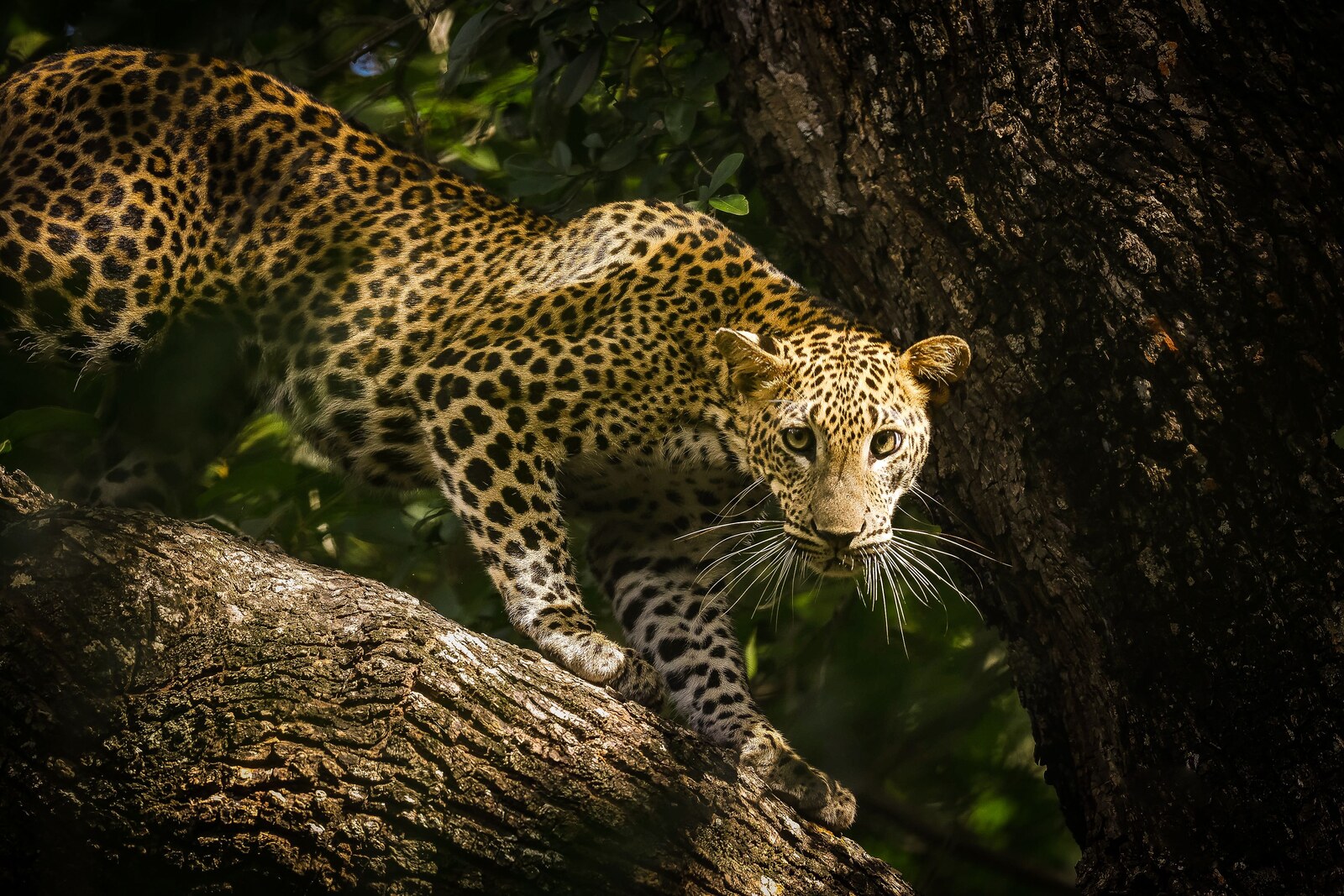
Coming down from the tea hills, Yala sits on the south-east coast — a natural stop before you turn west for Galle. The park is widely considered the best place in the world to spot leopards in the wild, with one of the highest densities of leopards per square kilometre anywhere on the planet. A 4x4 safari at first light is the way to find them.
The park combines coastline, scrubland, lagoons, and rocky outcrops. Beyond the leopards: wild elephants in herds, water buffalo, spotted deer, crocodiles, sloth bears, peacock everywhere. Allow a minimum of one full day. If wildlife is genuinely the priority, do two — one in Yala and one in Udawalawe for the guaranteed elephant herds.
A night at a luxury tented camp on the park boundary turns this into the kind of safari experience clients still talk about years later. The transfer from Yala to Galle is around three hours, mostly coast road. Easy — and remember to stop briefly to see the stilt fishermen at Koggala.
8. The Galle Test — the centrepiece
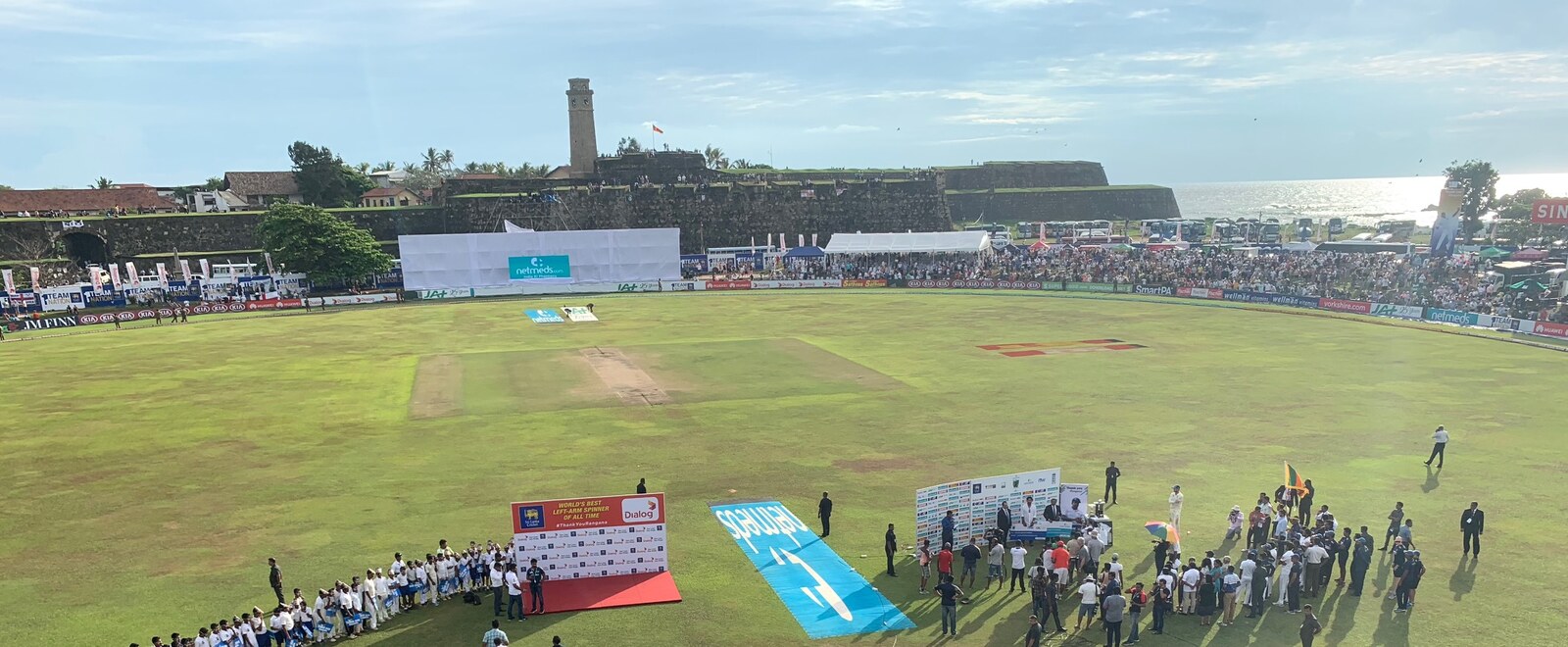
This is the one. If you go to one cricket ground in Sri Lanka, make it Galle.
The Galle International Cricket Stadium sits inside the walls of a seventeenth-century Dutch fort — a UNESCO World Heritage Site — with the Indian Ocean breaking behind the Southern End. It is one of the most photographed, most atmospheric, and most unforgettable cricket venues on earth. It has hosted Test cricket since 1998. Modest capacity, intimate setting, the sound of waves mixing with the crowd, and the lighthouse at the end of the fort wall.
Five days of Test cricket at Galle is not five days of cricket. It's five days of looking at something beautiful while cricket happens in the foreground. On day three the bowlers will be tired, an umpire will give a poor LBW decision, somebody behind you will explain at length why the spinner is over-spinning the ball, and at no point during any of it will you have looked at your phone.
The fort itself is a living neighbourhood — cobbled streets lined with boutique hotels, art galleries, cafes, and restaurants, all contained within the original ramparts. Walking the fort walls at sunset, with the lighthouse at one end and the cricket ground at the other, is the kind of experience that stays with you.
For accommodation, the choice is between staying inside the fort in a boutique hotel for the immersion (walking distance to the ground, in the middle of the action), or out on the south coast at Jetwing Lighthouse, on a rocky promontory between Galle and Unawatuna — for a resort-style stay with short transfers each match day. Both work. It depends whether you'd rather be inside the picture or looking at it from a beach.
9. The south coast — the wind-down
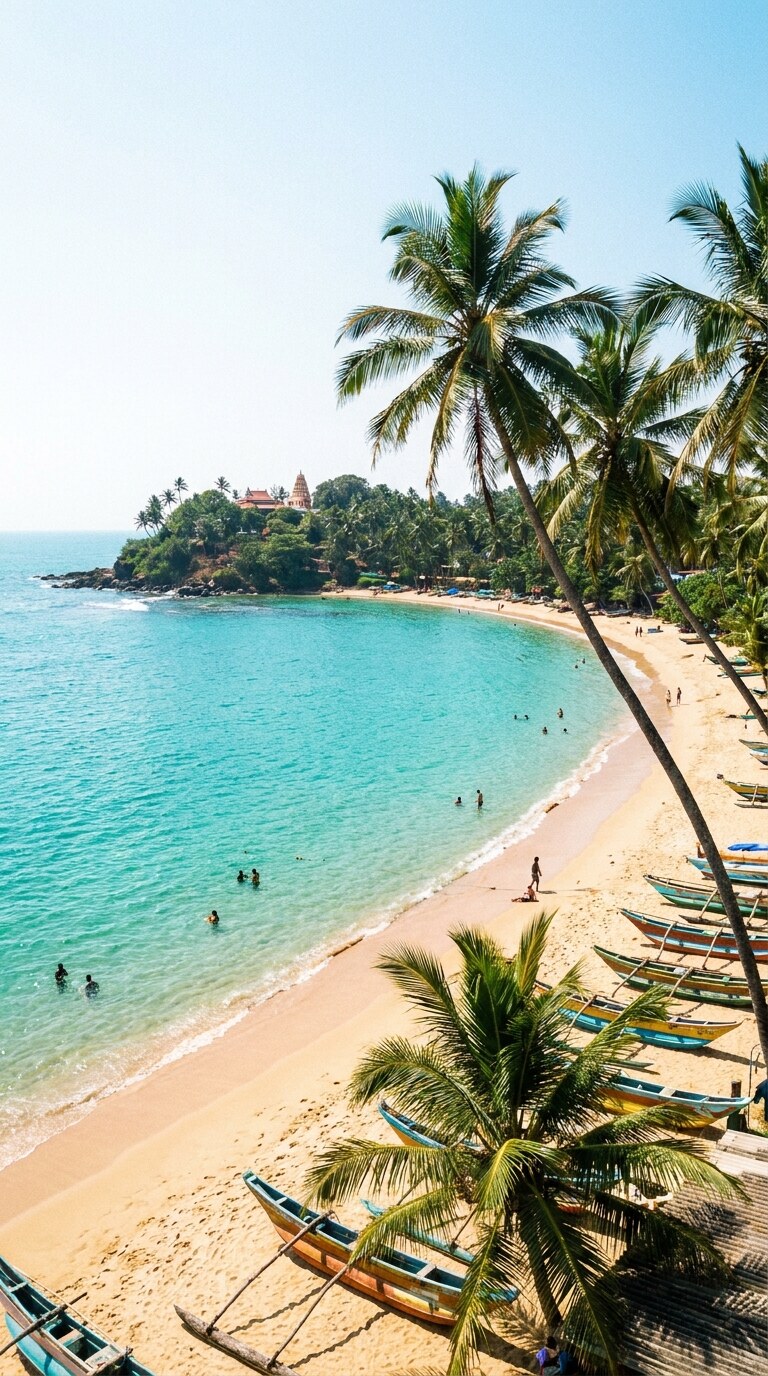
The south coast around Galle is a string of beach villages — Unawatuna, Hikkaduwa, Thalpe, Ahangama, Mirissa, Tangalle — each with its own character, with resort hotels typically within forty-five minutes of the Galle ground for match transfers. Between match days, or in the post-Test wind-down, this is where you go.
Unawatuna is the sheltered bay near Galle with the swimming, the seafront restaurants and the casual atmosphere. Mirissa is the surfing-meets-yoga town. Tangalle is the quieter, less-developed end — long stretches of golden sand and not a great deal else, in the best possible way.
Between November and April, the waters off Mirissa are considered among the best in the world for whale watching. Blue whales — the largest animals ever to have lived — and sperm whales are regularly reported, and a dawn boat trip is one of the more remarkable additions a client can make to the south-coast leg. Set off at first light, you're back at the beach for lunch.
Add the turtle hatcheries at Kosgoda or Bentota for an hour on a quiet morning. Watch hatchlings make their first run to the sea. It's the kind of detail that makes a cricket trip feel like a proper holiday.
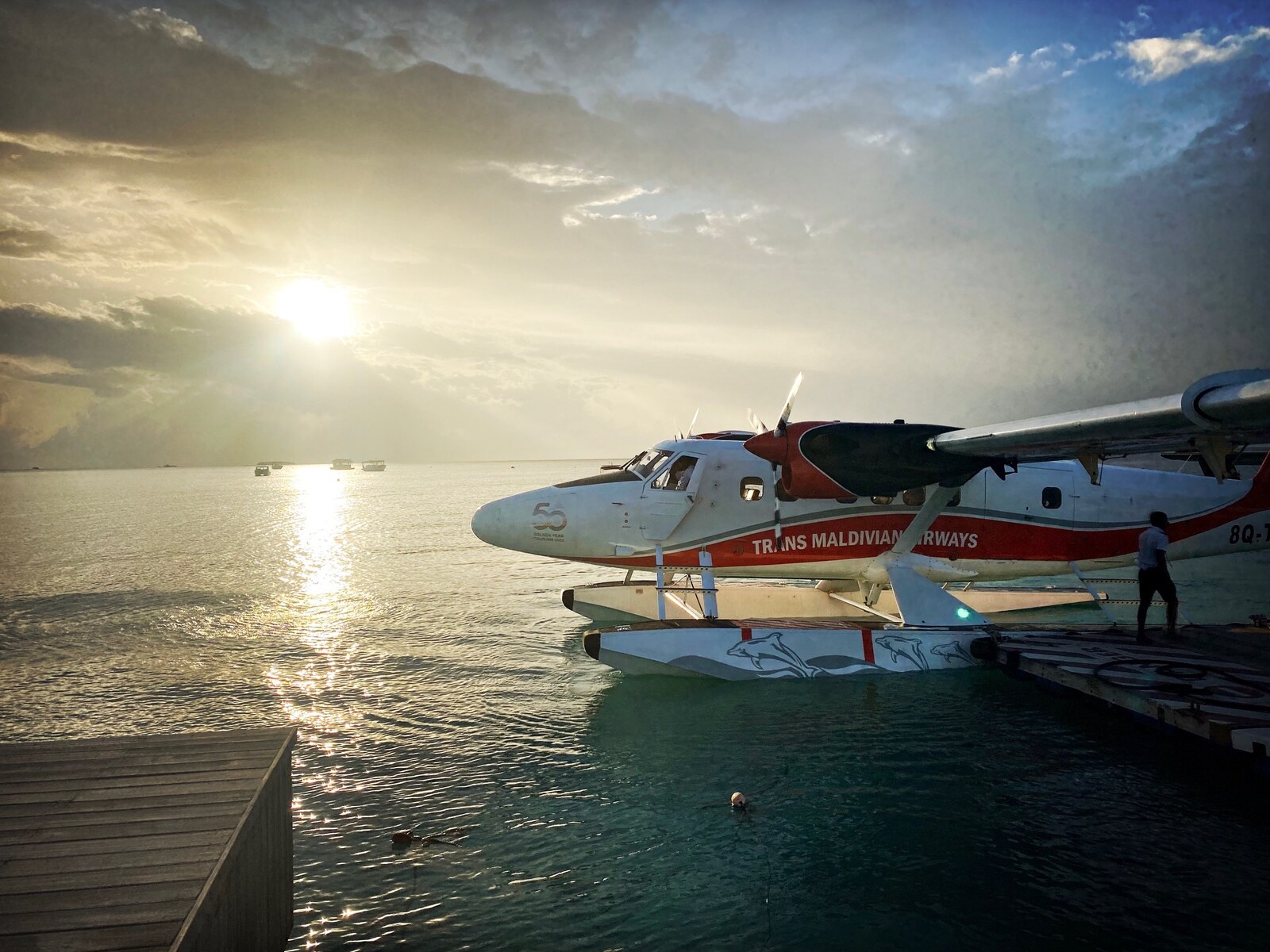
For a longer trip with the budget to match, the Maldives extension turns this into the ultimate winter escape. Ninety minutes by air from Colombo, the Maldives sits four to seven nights away from the kind of overwater-villa decompression that makes the long flight home feel reasonable. Not for every client, but for the ones whose partners came along quietly hoping for it, it's the perfect closer.
My personal top tip is to take a seaplane to resorts further from Malé — the sea cleaner, the coral better, the diving superior, the sealife more abundant. My personal favourite is Kuredu Island Resort, where the turtles are aplenty.
How we'd build it for you
Every Sri Lanka tour we run is built bespoke around the fixtures you want, the dates that work for your party, and the level you want to travel at. The fourteen days above are the way I'd run it if you handed me a tour with everyone on it equally curious about the cricket and the country.
Some clients want the Galle Test as a five-night focused trip with two days of fort, beach, and whales either side. Some want the fourteen-night grand tour — Colombo white-ball, Cultural Triangle, Kandy Test, Nuwara Eliya, Galle, Maldives. Most land somewhere in between.
Whichever way you want it, Sri Lanka is built for both kinds of traveller — the cricket purist and the partner who came along for the ride. By day three, both of them will have stopped asking about the schedule and started asking about the elephants.
To plan your tour, head to followontours.com or email ian@followontours.com.
More on Sri Lanka: our Sri Lanka travel guide